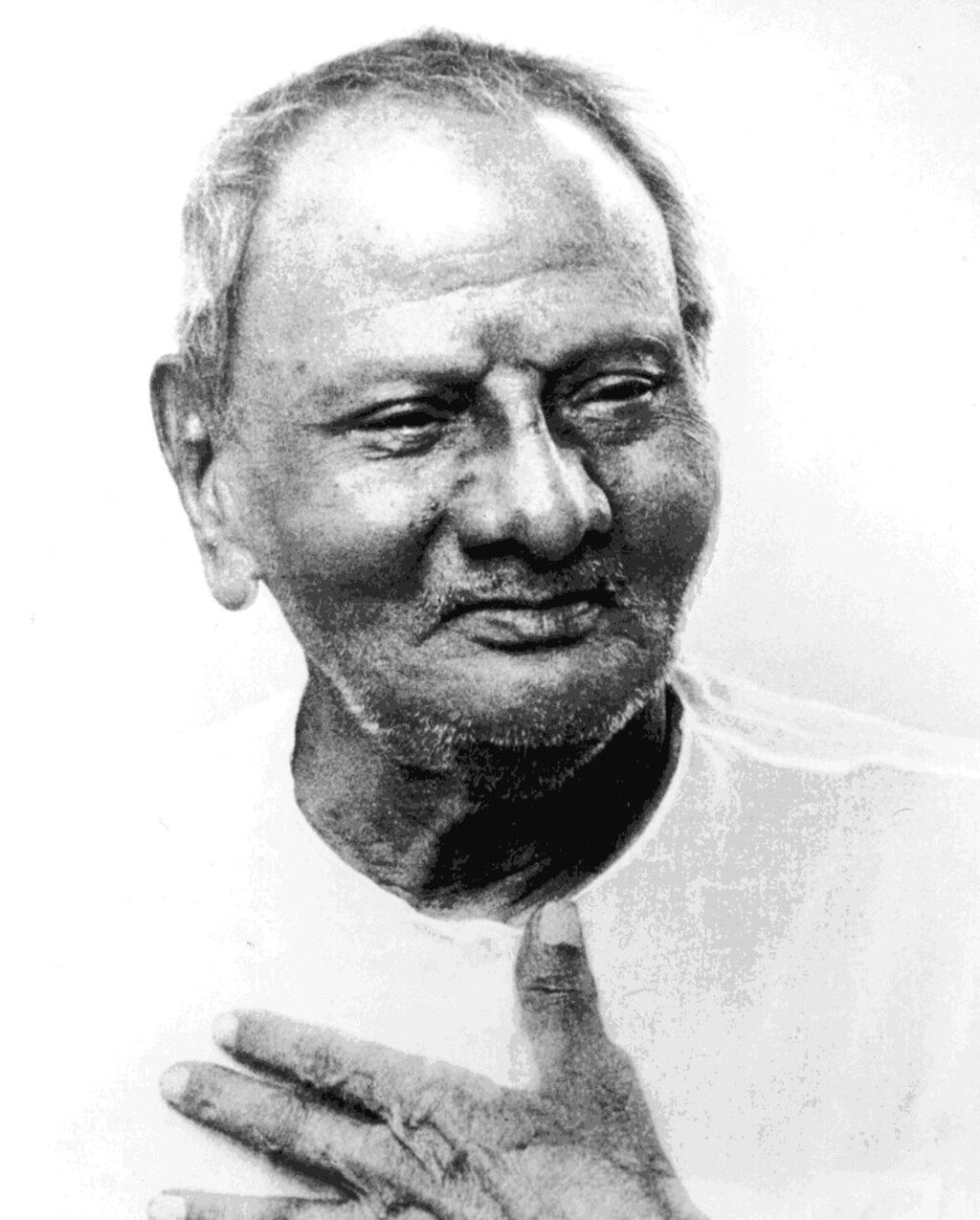
Embracing the Wholeness of Existence
Nisargadatta Maharaj's profound assertion, "You are not separate from the world; you are the world," invites us to reconsider our relationship with existence itself. This statement challenges the deeply ingrained belief in separation, urging us to recognize that our individual consciousness is intricately woven into the fabric of the universe. Understanding this interconnectedness is not merely an intellectual exercise; it is a transformative realization that can lead to profound awakening and liberation.
In a world often characterized by division and isolation, Maharaj's words resonate with a call to unity. They remind us that the boundaries we perceive between ourselves and the external world are illusory. This insight holds the potential to shift our perspective from one of isolation to one of belonging, fostering a deeper sense of compassion and empathy for all beings. The stakes are high; embracing this truth can lead to a radical transformation in how we live, love, and engage with the world around us.
The image / the metaphor
The imagery in Maharaj's quote evokes a sense of oneness that transcends the ordinary understanding of self and other. The use of "you" signifies the individual, while "the world" encompasses all of existence, suggesting a profound unity. The verb "are" serves as a bridge, indicating that our essence is not merely adjacent to the world but is fundamentally intertwined with it. This felt sense of connection invites us to explore the depths of our being and the reality of our shared existence.
Diving deeper into the metaphor, we can see that the quote encapsulates the essence of non-duality, where distinctions between self and other dissolve. It challenges the dualistic perception that separates the observer from the observed, urging us to recognize that our consciousness is not a solitary entity but a manifestation of the greater whole. This realization can evoke a sense of liberation, as we begin to understand that our joys, sorrows, and experiences are not isolated but part of a vast, interconnected tapestry of life.
In the speaker's tradition
Nisargadatta Maharaj's teachings are rooted in the non-dual tradition, which emphasizes the fundamental unity of all existence. Concepts such as dharma, the natural order of the universe, and sunyata, the emptiness that underlies all phenomena, resonate deeply with his assertion. In this context, the idea of kenosis, or self-emptying, becomes relevant; it suggests that by relinquishing our attachment to the ego and the illusion of separation, we can awaken to our true nature as part of the cosmos.
In his seminal work, "I Am That," Maharaj articulates the essence of this non-dual awareness, inviting seekers to explore the depths of their consciousness. He draws parallels with the teachings of Advaita Vedanta, where the realization of the self as non-separate from Brahman, the ultimate reality, is paramount. This profound understanding aligns with the Buddhist concept of prajna, or wisdom, which recognizes the interdependent nature of all beings and phenomena, further illuminating the path toward awakening.
Living the teaching
Consider a modern scenario where this teaching can be applied: a busy urban environment where individuals often feel disconnected from one another. In such a setting, the realization that "you are the world" can transform how we interact with others. Instead of viewing strangers as mere passersby, we can begin to see them as reflections of ourselves, each carrying their own stories, struggles, and joys. This shift in perception can foster a sense of community and compassion, encouraging us to engage more meaningfully with those around us.
Another application of this teaching might arise in the context of a challenging relationship. When faced with conflict, the notion of unity can serve as a powerful reminder that the other person is not separate from us but is, in fact, a part of our shared experience. By recognizing our interconnectedness, we can approach the situation with greater empathy and understanding, allowing us to navigate difficulties with a sense of grace and compassion. This practice of seeing the world as an extension of ourselves can lead to deeper connections and a more harmonious existence.
A reflection
As we contemplate the depth of Maharaj's quote, we are invited to ask ourselves: In what ways do I perceive separation in my life, and how might embracing the idea that I am the world transform my experience? This question encourages introspection and invites us to explore the boundaries we create between ourselves and others. By engaging with this inquiry, we can begin to dissolve the illusions of separation and step into a more profound awareness of our interconnected existence.